FOUNDATION
Toolbox Talks: Enhancing Awareness & Fostering Culture.
Join the OHS Hub South Africa community for essential safety insights, compliance tips, and product updates.
Posted on: 2026-03-23
By: Thandiwe Mokoena
Did you know that fostering a culture of safety in the workplace can significantly reduce the likelihood of accidents? By integrating toolbox talks into your daily operations, you can empower your team to prioritize safety.
Transforming workplace safety culture requires consistent effort and clear communication. The process below highlights the integration of Toolbox Talks and Daily Safe Task Instructions (DSTI) for enhanced safety awareness and compliance. For more detailed information on maintaining a safe working environment, consider learning about HIRA training.
Toolbox Talks: Enhancing Awareness & Fostering Culture.
Conduct tailored meetings to specific workforce needs.
Boost engagement and learning retention.
Resonate with team experiences for better understanding.
Ensure adherence to safety regulations like OSHA.
DSTI: Structured Approach to Daily Task Communication.
Schedule DSTI sessions regularly (daily/weekly).
Empower everyone to share insights.
Adapt topics based on current workplace risks.
Utilize our free DSTI checklist for effective briefings.
Creating a strong safety culture in the workplace begins with toolbox talks. These brief, focused meetings serve as a platform to discuss vital safety issues and practices that can prevent workplace accidents. By integrating these talks into your daily operations, you not only enhance safety awareness but also empower your employees to take an active role in maintaining a safe working environment.
At OHS Hub South Africa, we understand that regular safety communication is essential. Toolbox talks are not just a formality; they are a crucial part of fostering a proactive safety mindset. When employees feel informed and engaged, they’re more likely to adhere to safety protocols and voice concerns when they notice potential hazards!
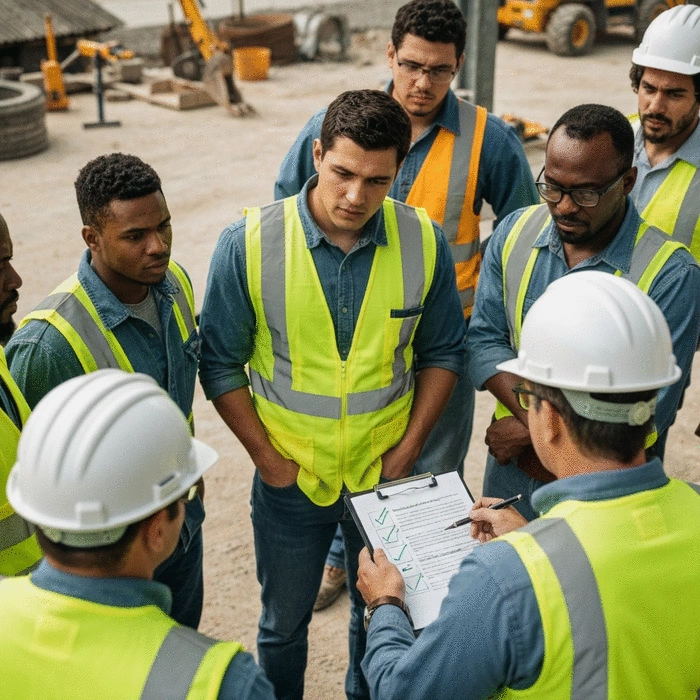
Toolbox talks are informal, short discussions focused on specific safety topics. They can occur before the start of a shift, during a break, or any time when the team can gather. The importance of these talks lies in their ability to:
By regularizing these talks, you're cultivating an environment where safety is prioritized, thus reducing the likelihood of incidents and injuries at work. This proactive approach is similar to how regular workplace medicals in South Africa contribute to employee well-being and preventative care.
Daily Safe Task Instruction (DSTI) is a structured approach to safety talks that emphasizes the importance of discussing daily tasks and associated risks. This method not only informs workers about what to expect during their shifts but also helps identify potential hazards specific to each day's work. DSTI encourages proactive measures to mitigate risks before they lead to accidents.
Implementing DSTI effectively means you can:
As we develop a culture of safety at OHS Hub South Africa, integrating DSTI into your routine toolbox talks can significantly improve your team's performance and safety compliance.
To maximize the effectiveness of your toolbox talks, consider incorporating visual aids such as charts or videos that illustrate key safety practices. This can help reinforce learning and make the discussions more engaging for your team!
As we reflect on the critical role of toolbox talks in shaping a proactive safety culture, it's vital to recognize their significance. These daily safety briefings are not just formalities; they are the foundation upon which a safe workplace is built. By fostering open communication and awareness, we ensure that every team member understands the importance of safety in their daily tasks. Remember, daily safety briefings can significantly reduce workplace incidents!
To summarize, here are the key takeaways for implementing effective toolbox talks in your organization:
These steps not only enhance safety awareness but also empower employees to actively participate in their own safety and that of their colleagues. At OHS Hub South Africa, we are committed to helping you cultivate a safety-first mindset in your workplace.
A toolbox talk is a short, informal safety discussion focused on specific hazards or safety procedures relevant to the day's work. They are designed to enhance safety awareness and encourage open communication among team members.
Toolbox talks are crucial because they raise awareness of specific safety risks, encourage dialogue about potential hazards, foster a collective safety culture, and ultimately help reduce workplace accidents and injuries.
DSTI is a structured approach to safety talks that focuses on discussing the specific tasks to be performed daily and the associated risks. It helps tailor safety discussions to the immediate work environment and ensures protocols are top-of-mind.
Consistency is key. While informal, these sessions should ideally be held daily or at least regularly (e.g., weekly) to reinforce safety protocols and address new or changing risks effectively.
To make talks more engaging, incorporate interactive elements like questions and discussions, use real-life examples that resonate with your team, and utilize visual aids such as charts or videos to illustrate key safety practices.
Implementing Daily Safe Task Instruction (DSTI) into your safety program is a game changer! It offers a structured approach to communicating safety measures tailored to daily tasks. By incorporating DSTI, you can expect a noticeable improvement in safety compliance and employee engagement.
Here are some final thoughts to consider:
By taking these steps, we not only protect our workforce but also reinforce a culture of safety that will resonate throughout our business. As a passionate advocate for workplace safety, I encourage you to embrace these practices wholeheartedly! For further insights into ensuring workplace safety, explore resources on risk assessments for workplace safety.
If you're ready to elevate your toolbox talks, why not start with a solid foundation? Download our free DSTI checklist today! It’s a practical tool designed to help you structure your daily safety briefings effectively.
Stay ahead in the world of occupational health and safety by subscribing to our newsletter. At OHS Hub South Africa, we share valuable insights, tips, and resources that can help you continuously improve your safety training programs.
Don’t forget to explore our curated selection of safety resources available on our platform! From training programs to compliance checklists, OHS Hub South Africa is here to support your journey towards a safer workplace. Together, let’s foster a culture of safety that benefits everyone! You might also find our guide on essential safety training for leaders particularly useful.
Here is a quick recap of the important points discussed in the article: